No edit summary |
|||
| (227 intermediate revisions by 3 users not shown) | |||
| Line 1: | Line 1: | ||
{{DISPLAYTITLE:Main Juggling Pattern Overview Page}} |
|||
Other languages: [[Main_Page/DE_Startseite|Deutsch]] [[Image:German_flag.svg|30px]] |
|||
== Theory == |
|||
Backups of this wiki: |
|||
a.k.a "what do all the numbers mean" |
|||
* https://github.com/iridos/jugglingpatterns-wiki/ |
|||
* text of pages in github-wiki: https://github.com/iridos/jugglingpatterns-wiki/wiki |
|||
* https://jugglingpatterns.dropamsee.de |
|||
* Entry point [[Siteswap]] |
|||
The goal of this wiki is to provide a collection of juggling patterns, organized into "learning paths" that contain patterns of increasing difficulty. |
|||
== Beginning Passing == |
|||
Teaching people passing clubs. |
|||
For the pattern labeled as "assymetric", one of passer is supposed to be far more advanced than the other, who needs no previous experience. |
|||
=== Zaps // Candlestick throws === |
|||
The wiki tries to answer the question: |
|||
* [[ Throwing first Zaps ]] |
|||
<center><b>"What should I try learning next?"</b></center> |
|||
* [[ zap zap zip ]] |
|||
and also: |
|||
* [[ 5-club 1-count with zaps ]] |
|||
<center><b>"I want to learn this (for me right now difficult) pattern, how do I get there"</b></center> |
|||
=== Normal Passes === |
|||
* [[ throwing the first normal passes ]] |
|||
There are many other juggling resources, but most of them do either provide no difficulty rating - or neglegt that there is more than one type of difficulty that a juggling pattern can have. Here, I tried to group patterns with common traits and also a common set of difficulty-types. |
|||
* [[ assymetric n-count vs 1-count ]] |
|||
* [[ 5-club 1-count ]] |
|||
* [[ 720 - zip-pass ]] |
|||
* [[ 5-club 2-count ]] |
|||
Entry points are provided for each type of throw, as each kind of throw needs a different throwing technique. |
|||
== "Selfless Passing" (Zips and Passes) == |
|||
These entry points are labeled as "Beginning with [...]" and primarily focus on building proficiency with a single throw type before progressing to more complex patterns that incorporate multiple throw types. |
|||
* [[ inverted parsnip ]] - 4 clubs - PZZPZ |
|||
== Solo and Passing Pattern Overview == |
|||
* [[ parsnip ]] - 5 clubs - PPZPZ |
|||
<imagemap> |
|||
* [[ PPPPZ ]] - 6 clubs |
|||
File:Passing-pattern-overview.svg|img-fluid|900px|center| |
|||
* [[ 7-club 1-count ]] |
|||
rect 219 227 487 263 [[Baby Dragon 756]] |
|||
<!-- |
|||
rect 219 293 492 341 [[Selfs,_Zaps,_Passes]] |
|||
The purpose of this wiki is to help you find the 1-3 new juggling patterns or tricks, that you want to try next. There are many resources on juggling patterns available on the net, but I often found myself overwhelmed by a long list of patterns of varying difficulty without a clear indicator on what single pattern to try out. |
|||
rect 1082 385 1217 460 [[Selfs_and_Passes#Jim's_n-counts|Jim's 4/2 count]] |
|||
rect 72 260 179 338 [[Killer Bunny]] |
|||
rect 56 498 207 578 [[Juggling 3 Objects Alone|Learning Selfs]] |
|||
rect 880 547 1034 627 [[Juggling 3 Objects Alone|Learning Selfs]] |
|||
rect 238 583 404 623 [[Beginning Zaps]] |
|||
rect 677 583 855 622 [[Beginning Single Passe]] |
|||
rect 127 399 338 443 [[Selfs and Zaps]] |
|||
rect 755 415 937 454 [[Selfs_and_Passes]] |
|||
rect 547 273 747 335 [[Double Passes]] |
|||
rect 597 116 827 194 [[Double Passes]] |
|||
rect 841 116 1071 265 [[Popcorn Family]] |
|||
rect 908 34 1106 75 [[Popcorn Family]] |
|||
rect 1090 166 1215 266 [[Triple Selfs]] |
|||
rect 1013 283 1212 373 [[Beginning Heffs]] |
|||
rect 367 399 584 450 [[Zaps and Passes (and Flips)]] |
|||
rect 41 166 251 210 [[Zaps and Heffs]] |
|||
rect 1068 553 1208 625 [[File:Passing-pattern-overview.svg]] |
|||
rect 41 36 252 130 [[Zaps and Heffs]] |
|||
rect 597 365 763 398 [[Selfs_and_Passes#6_club_half-synchronous_patterns]] |
|||
desc bottom-left |
|||
</imagemap> |
|||
== Entry Patterns == |
|||
These patterns are suitable for beginners. It helps a lot if one juggler is more experienced and can throw very nice, high and slow passes. All patterns only use one throw type (on the beginner side). Note that being suitable for beginners does not in all cases mean that these patterns are easy if you already have experience passing clubs in e.g. 4-count, 3-count, 2-count. These patterns tolerate much faster and lower passes than the patterns here. Also, the pattern sequences here will often feel complex if you only did a lot of n-count type patterns until you get used to them. |
|||
== Difficulty == |
|||
<!-- Note on galleries: caption text must follow the pipe symbol without a space, else this is interpreted as a line starting with space and becomes preformatted text that way --> |
|||
There is often no clear difficulty comparison between two patterns, because there is more than one type of difficulty in juggling. One can imagine them as difficulty dimensions - like axes on a coordinate system. A pattern can be easier than another one on one axis, but more difficult on another. |
|||
<gallery heights=300px widths=300px mode="packed-overlay" align="left"> <!--mode="packed-hover"--> |
|||
Types of difficulties include: |
|||
image:one-zap2.svg |link=Beginning Zaps |<font size=+1> Beginning Zaps</font> |
|||
* height of throws |
|||
image:one-pass-notext.svg |link=Beginning Single Passes |<font size=+1> Beginning Single Passes</font> |
|||
** number of high throws |
|||
image:selfs.svg |link=Juggling 3 Objects Alone |<font size=+1> Juggling 3 Objects Alone</font> |
|||
** difference in height between highest and lowest throw |
|||
* length and/or complexity of sequence |
|||
</gallery> |
|||
Things that push your level back towards beginner: |
|||
* different object to juggle (ball vs club vs ring) |
|||
* different type of throws (crossed arms/mills mess, body throws in pattern) |
|||
== |
== Single-Passes // Zaps == |
||
<gallery heights=300px widths=350px mode="packed-overlay" align="left" perrow="3"> |
|||
[[learning the 3 ball cascade]] |
|||
image:one-pass-notext.svg |link=Selfless Passing |<font size=+1> Selfless Passing </font> (4 to 7 clubs) |
|||
image:Zaps passes.svg |link=Zaps and Passes (and Flips) |<font size=+1> Zaps + Passes (and Flips) </font> |
|||
image:N-count.svg |link=Selfs and Passes|<font size=+1> Selfs and Passes</font> |
|||
image:N-count-zaps.svg |link=Selfs and Zaps|<font size=+1> Selfs and Zaps</font> |
|||
image:Zap-self-pass.svg |link=Selfs, Zaps, Passes|<font size=+1> Selfs Zaps Passes</font> |
|||
</gallery> |
|||
[[first steps after 3 ball cascade]] |
|||
== Theory | Doubles: Double Passes; Heffs (Column Double Selfs) == |
|||
[[goal 4 ball fountain]] |
|||
<gallery heights=250px widths=50px mode="packed-overlay"> <!--mode="packed-hover"--> |
|||
image:Theory.svg |link=Siteswap |<font size=+1> Siteswap - Juggling Math</font> |
|||
image:7-club-2-count.svg |link=Double Passes |<font size=+1> Double Passes</font> |
|||
image:heffs_and_passes.svg | link=Heffs |<font size=+1> Heffs</font> |
|||
</gallery> |
|||
<!-- == Holy Grail == |
|||
[[goal 5 ball cascade]] |
|||
Ok, I included this too early, because it was such a good story, although I hadn't progressed there myself. |
|||
== 2 Jugglers == |
|||
The Patterns I collected aren't so good trainings patterns, as we figured out when trying ourselves because in period 5, the double passes trigger each other, which makes the patterns unstable more quickly, as any bad double pass leads to another bad double pass and onto a downward spiral |
|||
* [[goal 7 club 1-count]]: parsnip series |
|||
<gallery heights=300px widths=400px mode="packed-overlay"> |
|||
image:DragonsGrail.jpg | link=Quest for the Holy Grail|<font size=+1>Quest for the Holy Grail<br>(zaps+double passes)</font> |
|||
</gallery> |
|||
--> |
|||
== Other Juggling Resources == |
|||
* [[why nots]] |
|||
[[Other Juggling Resources]] |
|||
* [[ half-synchronous n-counts ]] 4 count and friends |
|||
== Unfinished == |
|||
* [[list of asymmetric passing patterns]] patterns with different difficulty for both passers |
|||
[[Todo]] main page overview of unwritten pages |
|||
== 3 Jugglers == |
|||
== 4 Jugglers == |
|||
<gallery heights=300px widths=350px mode="packed-overlay" align="left" perrow="3"> |
|||
== 5 Jugglers == |
|||
File:Wiki_rules.svg |link=Wiki Writing Advice |<font size=+1> Wiki Writing Rules </font> |
|||
== 6 Jugglers == |
|||
== N Jugglers == |
|||
--> |
|||
</gallery> |
|||
Latest revision as of 10:59, 19 March 2026
Other languages: Deutsch 
Backups of this wiki:
- https://github.com/iridos/jugglingpatterns-wiki/
- text of pages in github-wiki: https://github.com/iridos/jugglingpatterns-wiki/wiki
- https://jugglingpatterns.dropamsee.de
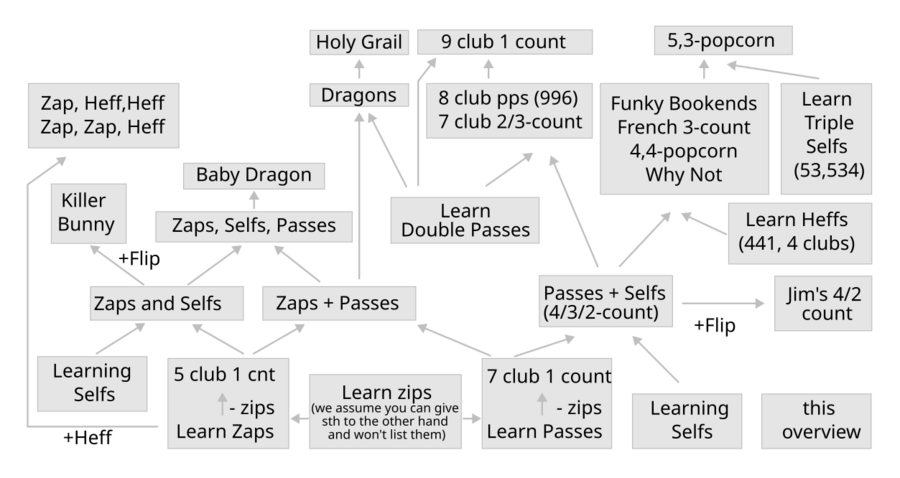
The goal of this wiki is to provide a collection of juggling patterns, organized into "learning paths" that contain patterns of increasing difficulty.
The wiki tries to answer the question:
and also:
There are many other juggling resources, but most of them do either provide no difficulty rating - or neglegt that there is more than one type of difficulty that a juggling pattern can have. Here, I tried to group patterns with common traits and also a common set of difficulty-types.
Entry points are provided for each type of throw, as each kind of throw needs a different throwing technique.
These entry points are labeled as "Beginning with [...]" and primarily focus on building proficiency with a single throw type before progressing to more complex patterns that incorporate multiple throw types.
Solo and Passing Pattern Overview
Entry Patterns
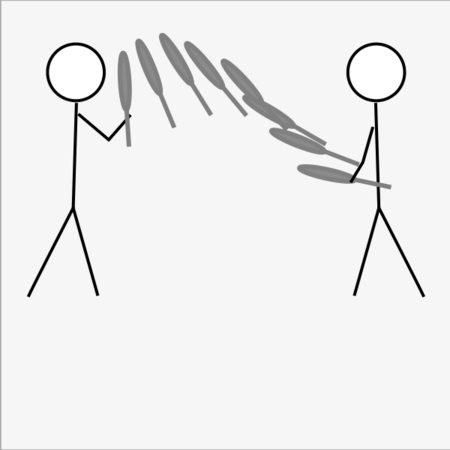
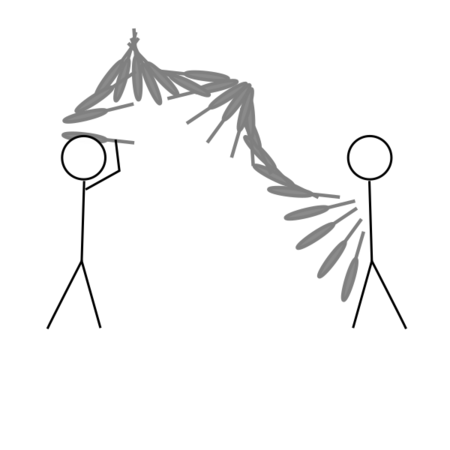
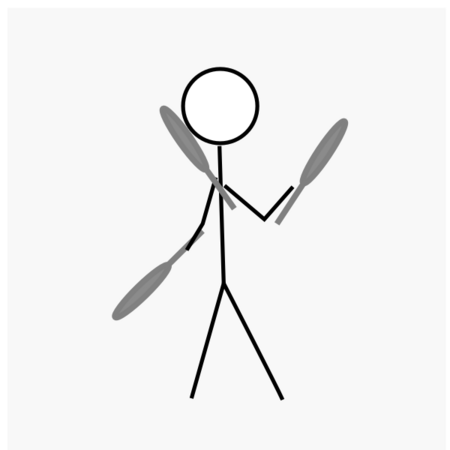
These patterns are suitable for beginners. It helps a lot if one juggler is more experienced and can throw very nice, high and slow passes. All patterns only use one throw type (on the beginner side). Note that being suitable for beginners does not in all cases mean that these patterns are easy if you already have experience passing clubs in e.g. 4-count, 3-count, 2-count. These patterns tolerate much faster and lower passes than the patterns here. Also, the pattern sequences here will often feel complex if you only did a lot of n-count type patterns until you get used to them.
-
 Beginning Zaps
 -
 Beginning Single Passes
 -
 Juggling 3 Objects Alone
Single-Passes // Zaps
-
Selfless Passing (4 to 7 clubs)
-
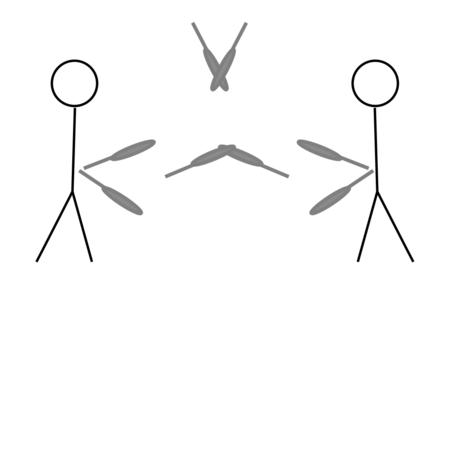 Zaps + Passes (and Flips)
 -
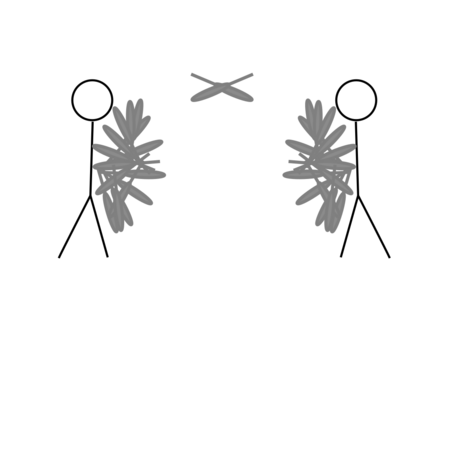 Selfs and Passes
 -
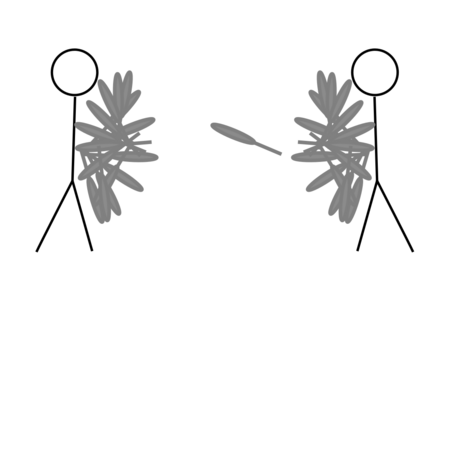 Selfs and Zaps
 -
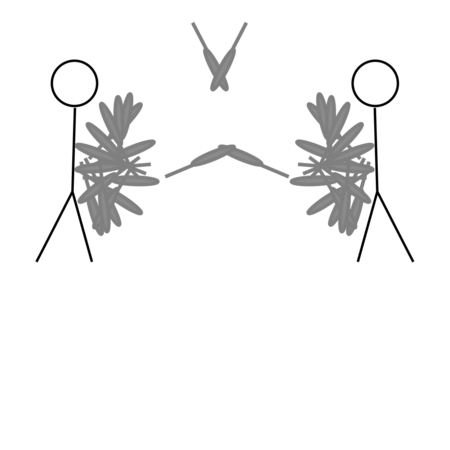 Selfs Zaps Passes
Theory | Doubles: Double Passes; Heffs (Column Double Selfs)
-
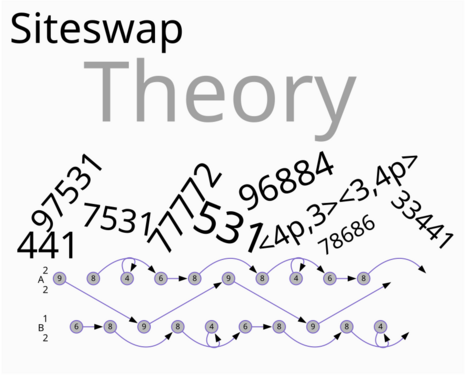 Siteswap - Juggling Math
 -
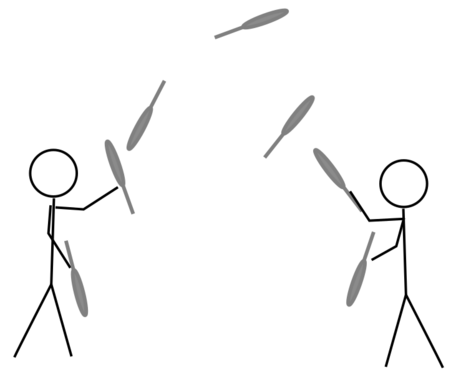 Double Passes
 -
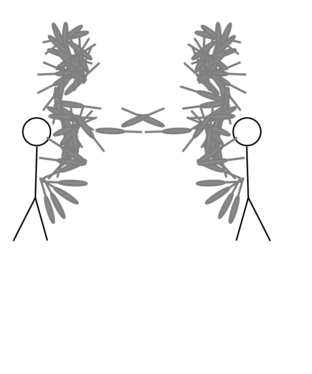 Heffs
Heffs
Other Juggling Resources
Unfinished
Todo main page overview of unwritten pages
-
 Wiki Writing Rules


